How to Build a Salad
Do you remember an episode of Seinfeld where Elaine tries to order a “Big Salad”? When the waitress tells her they don’t have one, she relents and asks for two small salads. Then she asks for a big bowl, to which the waitress replies, “We don’t have big bowls.” Thankfully, we have come a long way since then, and today almost every restaurant, from fast food chains to fancy sit-down, has a big salad on the menu.
So why is it that some people find themselves eating a salad for lunch only to inhale a bag of chips as soon as they walk in the door after work? Or, other people consume salad after salad, and the scale continues to go up? The answer lies in HOW they build a salad.
Mistakes People Make When It Comes to Building a Salad
Usually, there are two basic mistakes at play. One, the salad is too small or consists mostly of greens and vegetables with little to no protein. Two, the salad has been overloaded with what people perceive as healthy ingredients — nuts, seeds, avocado—that far exceed ideal total calories for that meal.
“But Jenny,” friends will say to me, “I eat at least two cups of mixed greens every day. It’s so healthy.” While it’s true that dark leafy greens, spinach, and kale are excellent sources of micronutrients, an entire box of salad will only get you about 2 or 3 grams of fiber. And that’s if you eat the entire 5-ounce box in one sitting. Even adding cucumbers, cherry tomatoes, and shredded carrots isn’t enough to keep your stomach from grumbling until dinner.
Conversely, adding in the kitchen sink — crumbled goat cheese, sliced avocado, chopped walnuts, and sliced hard-boiled eggs isn’t the answer either. Especially without measuring and weighing these ingredients.
Greens, Beans, and Grains Formula for Building a Fiber-Fueled and Protein-Forward Salad
“Greens, Beans, and Grains” is what I preach to the women I help coach with their nutrition and body-composition goals. Bowls that have 25 grams of protein and 10g or more of fiber help stabilize your blood sugar and take longer to digest, so you feel fuller longer. These are not grain bowls, mind you. If you are trying to lose weight, grains and beans can add up. Think of them as additions to your salad, not the base of your salad.
Greens
A filling big salad begins, of course, with greens. I always try to choose a blend for more diversity - spring mix, spinach & baby kale, power greens, or a crunch blend like Romaine and baby gems.
Beans
Before you start worrying, I’m not talking about a side dish's worth of beans. On the small side, like ¼ to a ½ cup. This will bring your fiber intake to 5-10 grams, depending on the beans or lentils you choose. And we haven’t even added the grains yet.
Grains
Not only do the grains give you taste and texture, but they also pack even more fiber into your salad. As with the beans, you’re not adding a lot. Keep it to ¼ - 1/3 cup. Great choices include: quinoa, barley, or brown rice.
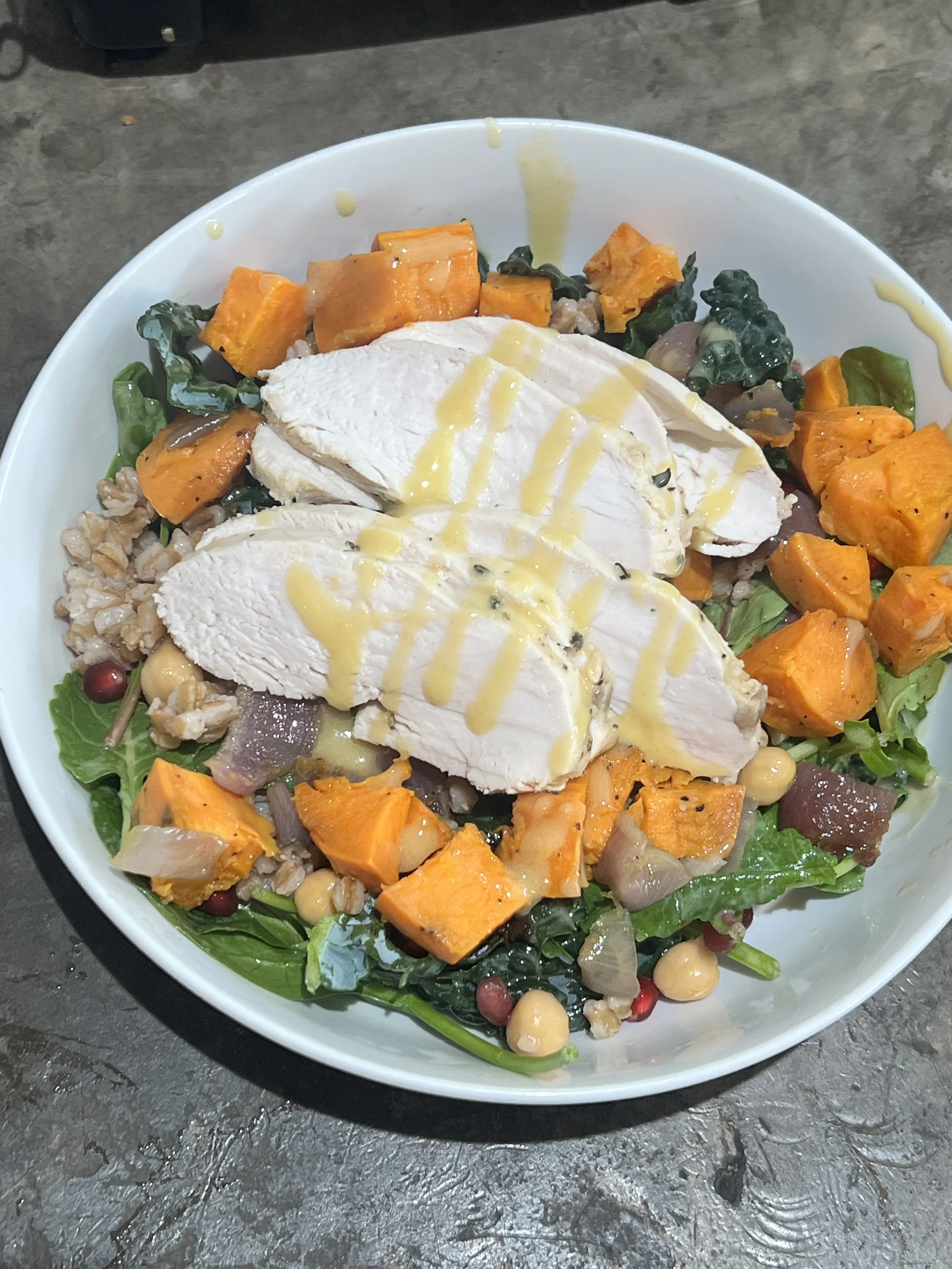
Here’s an example of a simple greens, beans, and grains salad -
2 cups baby greens
¼ cup shelled edamame beans
¼ cup quinoa
cherry tomatoes
sliced cucumbers
shredded carrots
chopped bell peppers
I follow the rule of 4 when it comes to veggies. I try to have 4 different kinds of cut/chopped veggies
25 grams of a lean protein, such as 4 ounces chopped skinless, roasted chicken
Add your dressing, no more than 2 tbsp.
Build a pantry that fuels your goals for protein and fiber. Aim for a variety of grains and legumes. Stock up on dried lentils and canned beans. Create a “salad bar in your fridge” by taking the time to chop, dice, and shred vegetables when you bring them home from the store.
Before you know it, you’ll be building high-protein, high-fiber salads that keep your satisfied without sabotaging your calorie budget.